⚠️ ARCHIVED SITE - HISTORICAL REFERENCE ONLY iHealthFacts is no longer being updated. The information on this site may be out of date and should not be relied upon for health decisions. Please consult current evidence sources.
We found five systematic reviews that compared infection rates in people who had previously had COVID-19, and had not been vaccinated, to people who had been vaccinated.
Two of these reviews contained the types of studies we can be most certain about:
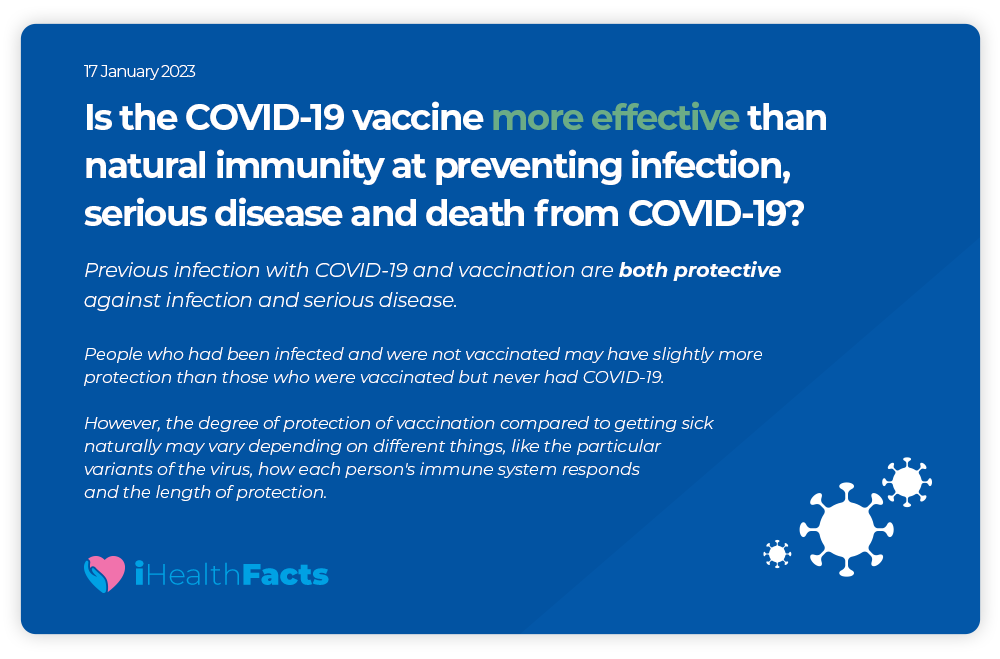
The first of these found that vaccinated people who never had COVID-19 were slightly more likely to become infected than unvaccinated people who had previously been infected. Giving a vaccine to someone who had been previously infected gave additional protection from infection (hybrid immunity), but only by a small amount.
The second of these found that either being previously infected with COVID-19 or being fully vaccinated can reduce the likelihood of experiencing severe symptoms by almost half, compared to someone who hasn’t had either. The chances of severe COVID-19 were lower in people who were previously infected than in those who were vaccinated regardless of age.
A HIQA review describes four relevant studies which reported:
First study: People who were previously infected with COVID-19 have a lower risk of experiencing severe outcomes than those who are fully vaccinated.
Second study: There is no difference in the risk of getting hospitalised or infected between people who are fully vaccinated and those who were infected previously.
Third study: Both fully vaccinated individuals and those who were previously infected have a lower risk of getting infected, but the previously infected group may have a slightly lower risk.
Fourth study: Couldn’t compare the groups due to low numbers of reinfections overall.
None of these studies had been peer-reviewed when they were published in this report.
We found two other reviews of lower certainty (here and here)
The first reported on people who had previously been infected, some of whom were subsequently vaccinated and some who were not. Less than 1% of either group got infected again within one year, with slightly lower rates in those who had been vaccinated.
The second review was unable to provide an estimate for the rate of reinfection. It did show that people who were fully vaccinated had lower rates of severe COVID-19. However, this finding should be interpreted with caution due to the small number of severe cases overall, which makes it challenging to draw any firm conclusions.
Guidelines and recommendations
The WHO in April 2020 said that it was likely that natural infection may provide similar protection against symptomatic disease as vaccination, but that there was some uncertainty about this in light of new variants.
The HSE recommends that people who have had COVID-19 who are over-50 or are susceptible to infection should be vaccinated.
Things to Remember
Not all scientific studies are equal in terms of reliability.
Just because a treatment is recommended by an expert or authority, you cannot be sure it is trustworthy.
You can’t be certain about treatment effects that are based on studies with few people or events.
Reviewers
Lead Researcher: Dr. Paula Byrne, Senior Post-doctoral Researcher, Evidence Synthesis Ireland & HRB-Trials Methodology Research Network, College of Medicine, Nursing and Health Sciences, University of Galway
Reviewed by: Prof. Declan Devane, Professor of Health Research Methodology, Deputy Dean, College of Medicine, Nursing and Health Sciences, University of Galway,
Topic advisor: Prof. Corinna Sadlier, Consultant in Infectious Diseases, Cork University Hospital, Clinical Professor (Honorary), University College Cork
Public and Patient advisor: Anne Daly, Public and Patient Involvement in Research (PPI) advisor, PPI Ignite, University of Galway
Journalist Advisor: Dr. Claire O’Connell, PhD in cell biology, Masters in Science Communication. Contributor to The Irish Times, writing about health, science and innovation.
Conflict of Interest Statement: The authors have no financial or other conflicts of interest for this health claim summary.
This website uses cookies to improve your experience. We'll assume you're ok with this, but you can opt-out if you wish. Cookie settingsAcceptRead More
Privacy & Cookies Policy
Privacy Overview
This website uses cookies to improve your experience while you navigate through the website. Out of these cookies, the cookies that are categorized as necessary are stored on your browser as they are essential for the working of basic functionalities of the website. We also use third-party cookies that help us analyze and understand how you use this website. These cookies will be stored in your browser only with your consent. You also have the option to opt-out of these cookies. But opting out of some of these cookies may have an effect on your browsing experience.
Necessary cookies are absolutely essential for the website to function properly. This category only includes cookies that ensures basic functionalities and security features of the website. These cookies do not store any personal information.
Any cookies that may not be particularly necessary for the website to function and is used specifically to collect user personal data via analytics, ads, other embedded contents are termed as non-necessary cookies. It is mandatory to procure user consent prior to running these cookies on your website.