⚠️ ARCHIVED SITE - HISTORICAL REFERENCE ONLY iHealthFacts is no longer being updated. The information on this site may be out of date and should not be relied upon for health decisions. Please consult current evidence sources.
Case reports often describe the experience of just one person, and tend to focus on patients who have rare or unusual symptoms.
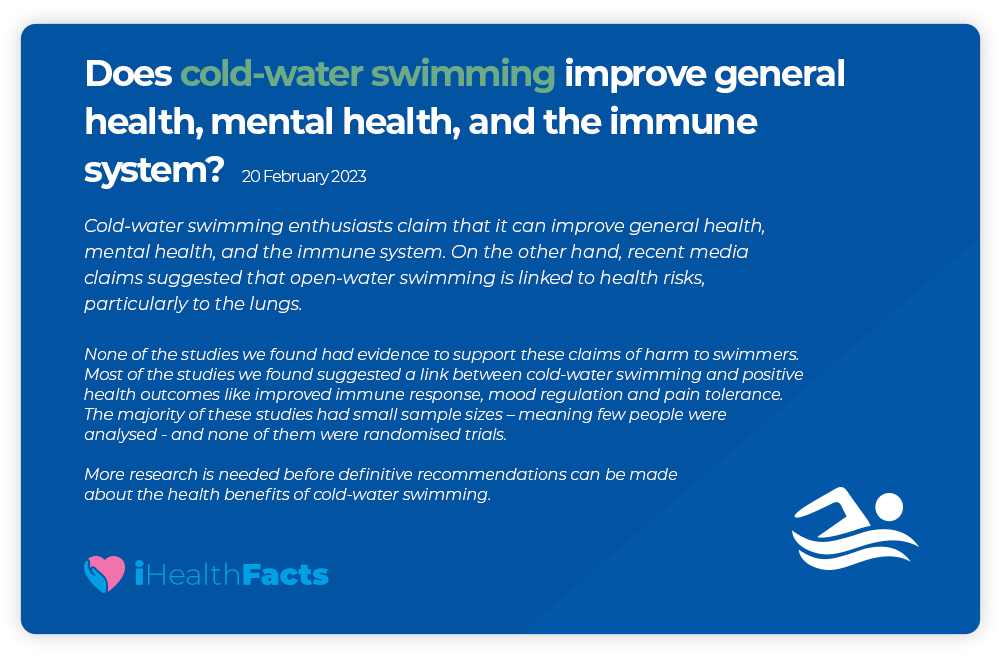
It has also been suggested that exposure to intensive short-term, cold stimuli such as swimming in cold water is a possible form of body hardening. Hardening means exposure to a natural stimulus, resulting in the body being better able to resist stress and diseases.
Some of these studies (Study 6, Study 7, Study 8, Study 9, Study 10) used the blood samples to examine the impact of cold-water swimming on hormones in the blood, like adrenaline, noradrenaline, and cortisol. These are known as “stress hormones” because they are released in response to stressful situations. Most of these studies found that cold-water swimming had a positive impact on the regulation of these hormones, except for Study 8, which did not report any significant effects.
Some studies (Study 1, Study 4, Study 5) used the blood samples to examine important components of the body’s defence system that are present in the blood, such as red blood cells, white blood cells or platelets. The studies suggest that cold-water swimming may have a beneficial effect on these components of the blood, potentially improving overall health and wellbeing.
Other studies (Study 2, Study 3) used questionnaires to examine the impact of cold-water swimming on wellbeing, fatigue, pain and mental health. Study 2 found that swimmers who participated in cold-water swimming had higher levels of vigour and less fatigue compared to the group who did not swim in cold water. Additionally, those who engaged in winter swimming reported a reduction in pain symptoms. These findings suggest that cold-water swimming may have a positive impact on physical wellbeing.
Study 3 did not find any significant differences in mental health between individuals who participated in cold-water swimming and those who did not. This suggests that while cold-water swimming may have benefits for physical wellbeing, it may not necessarily lead to improvements in mental health.
The above findings suggest that repeated cold-water swimming can lead to adaptive mechanisms that offer various benefits, such as improved immune response, mood regulation, and pain tolerance, despite the initial stress response that exposure to cold water can trigger. However, further research is necessary to understand the underlying mechanisms of these effects fully and to determine safe and effective strategies for incorporating cold-water exposure into one’s lifestyle.
Things to Remember
Opinions alone are not a reliable basis for claims about the effects of treatments.
Beware of claims that are based on a single study. Ask if other studies examine the same question and, ideally, if there a careful summary of all the relevant studies.
Lead Researcher:Dr Caoimhe Madden, Postdoctoral researcher, Evidence Synthesis Ireland, School of Nursing and Midwifery, University of Galway
Reviewed by: Prof. Declan Devane, Professor of Health Research Methodology, Deputy Dean, College of Medicine, Nursing and Health Sciences, University of Galway, Scientific Director, HRB-Trials Methodology Research Network Director, Evidence Synthesis Ireland. Director, Cochrane Ireland
Topic advisor:Prof. Emma Wallace,Professor of General Practice, Dept of General Practice, University College Cork & General Practitioner, Parklands Surgery, Commons Road, Cork.
Public and Patient advisor:Deirdre Mac Loughlin, Public and Patient Involvement in research (PPI) advisor, PPI Ignite, NUI Galway
Journalist Advisor:DrClaire O’Connell, PhD in cell biology, MSc Communication. Contributor to The Irish Times, writing about health, science and innovation.
Conflict of Interest Statement: The authors have no financial or other conflicts of interest for this health claim summary.
This website uses cookies to improve your experience. We'll assume you're ok with this, but you can opt-out if you wish. Cookie settingsAcceptRead More
Privacy & Cookies Policy
Privacy Overview
This website uses cookies to improve your experience while you navigate through the website. Out of these cookies, the cookies that are categorized as necessary are stored on your browser as they are essential for the working of basic functionalities of the website. We also use third-party cookies that help us analyze and understand how you use this website. These cookies will be stored in your browser only with your consent. You also have the option to opt-out of these cookies. But opting out of some of these cookies may have an effect on your browsing experience.
Necessary cookies are absolutely essential for the website to function properly. This category only includes cookies that ensures basic functionalities and security features of the website. These cookies do not store any personal information.
Any cookies that may not be particularly necessary for the website to function and is used specifically to collect user personal data via analytics, ads, other embedded contents are termed as non-necessary cookies. It is mandatory to procure user consent prior to running these cookies on your website.